
Hanuman Chalisa in Gujarati: A Comprehensive Guide
Discovering a reliable Hanuman Chalisa PDF in Gujarati requires careful searching, as authenticity is key for devotional practice and accurate recitation.
What is the Hanuman Chalisa?
The Hanuman Chalisa is a devotional hymn dedicated to Lord Hanuman, a revered deity in Hinduism symbolizing strength, devotion, and unwavering loyalty. Composed in the Awadhi dialect by the 16th-century poet Tulsidas, it consists of forty verses – hence the name ‘Chalisa’ – celebrating Hanuman’s virtues and recounting his heroic deeds from the epic Ramayana.
This sacred text isn’t merely a recitation of events; it’s a powerful spiritual tool believed to bestow blessings of courage, wisdom, and protection upon its devotees. The verses vividly portray Hanuman’s unparalleled devotion to Lord Rama, his extraordinary physical prowess, and his selfless service.
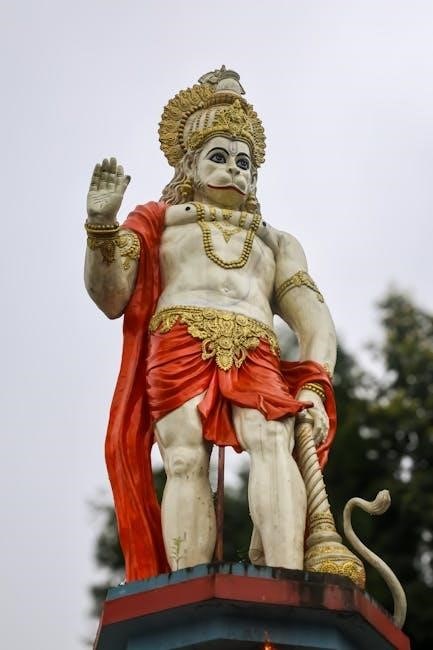
Finding a Gujarati version, often in PDF format, allows speakers of that language to connect with the hymn’s profound message in their native tongue, deepening their devotional experience. The Chalisa’s accessibility and potent verses make it a beloved practice for Hindus worldwide.
The Significance of Hanuman in Hinduism
Lord Hanuman holds an exceptionally prominent position within the Hindu pantheon, revered as a symbol of ultimate devotion, strength, and selfless service. Often depicted as a monkey god, his form represents humility and unwavering dedication to duty. He is considered one of the seven immortals – the ‘Chiranjivin’ – blessed with eternal life.
Hanuman’s importance stems from his pivotal role in the Ramayana, where he serves as Lord Rama’s most loyal companion and devotee. His courage, intelligence, and unwavering faith are central to Rama’s victory over Ravana. He embodies the ideal ‘bhakta’ – a devoted follower – and is worshipped for his ability to overcome obstacles.
Accessing the Hanuman Chalisa in Gujarati allows devotees to connect with this powerful deity through a beloved devotional practice, fostering a deeper spiritual connection and invoking his blessings. His popularity extends across India and beyond.
Hanuman Jayanti: Celebrating the Birth of Hanuman
Hanuman Jayanti, the auspicious celebration of Lord Hanuman’s birth, is a significant festival observed by Hindus with immense devotion and fervor. Falling in the month of Chaitra (March/April) according to the Hindu lunar calendar, it’s a day dedicated to honoring the unwavering devotion and extraordinary strength of this revered deity.
Devotees mark this occasion with special prayers, fasting, and visits to Hanuman temples. A common practice involves adorning Hanuman’s idols with ‘sindur’ (red powder) and flowers, symbolizing his power and vitality. Reciting the Hanuman Chalisa, particularly in languages like Gujarati, is a central part of the celebrations.
Finding a Gujarati Hanuman Chalisa PDF allows devotees to participate fully in the festivities, even remotely, deepening their connection with Hanuman and seeking his blessings for strength and devotion.
Hanuman’s Powers and Abilities (Siddhis)
Lord Hanuman is renowned throughout Hindu mythology for possessing extraordinary powers, known as ‘Siddhis’. These aren’t merely physical feats, but manifestations of his unwavering devotion and spiritual attainment. Among the most prominent is his ability to fly and move with incredible speed, enabling him to traverse vast distances swiftly – crucial during his service to Lord Rama.
Beyond physical prowess, Hanuman embodies immense strength, courage, and unwavering loyalty. He’s considered one of the ‘Chiranjivin’ – the immortals – possessing eternal life. Accessing a Hanuman Chalisa PDF in Gujarati allows devotees to connect with these divine qualities.
Reciting the Chalisa is believed to invoke Hanuman’s blessings, fostering similar attributes within the practitioner, aiding in overcoming obstacles and achieving spiritual growth.
Hanuman’s Role in the Ramayana
Hanuman’s significance within the epic Ramayana is paramount; he isn’t simply a character, but a pivotal force driving the narrative towards dharma’s triumph. As a devoted follower of Lord Rama, his unwavering loyalty and selfless service are central themes. He undertakes perilous journeys, locates Sita, and delivers crucial messages, demonstrating unparalleled courage and intelligence.
His strength isn’t merely physical, but a testament to his devotion. Finding a Hanuman Chalisa PDF in Gujarati allows devotees to reflect on these heroic deeds and embody similar qualities. Hanuman’s actions exemplify dedication and unwavering faith.
The Ramayana showcases Hanuman as a bridge between the divine and the mortal, a symbol of ultimate devotion and selfless service, inspiring generations.
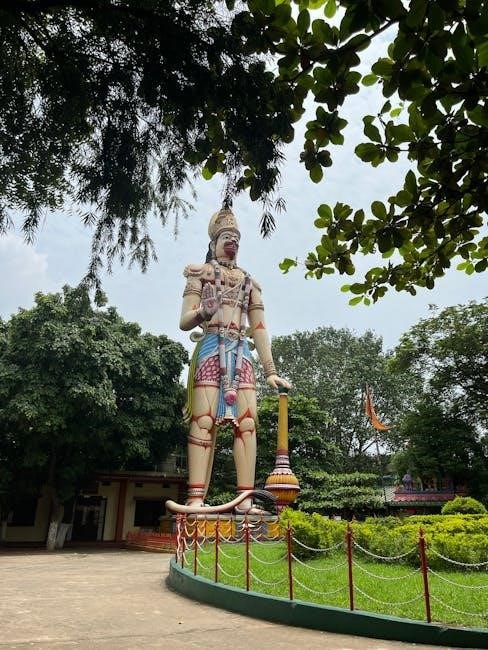
Hanuman Chalisa in Gujarati: Accessing the Text
Numerous online resources offer the Hanuman Chalisa in Gujarati, including downloadable PDFs, facilitating convenient access for recitation and devotional practice.
Finding a Reliable Hanuman Chalisa PDF in Gujarati
Locating a trustworthy Hanuman Chalisa PDF in Gujarati demands diligence, as the internet hosts varying degrees of accuracy. Prioritize sources known for their religious authenticity and commitment to precise translations. Many websites claim to offer the Chalisa, but verifying the text against established versions is crucial. Look for PDFs originating from reputable Hindu organizations or temples, as these are more likely to be accurate and free from errors.
Consider checking for endorsements or reviews from experienced practitioners. A reliable PDF should clearly present the verses in Gujarati script, with proper formatting and legible font sizes. Beware of PDFs with unusual characters, grammatical inconsistencies, or deviations from the traditional Chalisa structure. Downloading from well-known digital libraries specializing in religious texts can also increase the likelihood of obtaining a genuine version. Always scan downloaded files with antivirus software to ensure they are safe.
Popular Websites Offering the Gujarati Chalisa
Several online platforms provide access to the Hanuman Chalisa in Gujarati, catering to devotees seeking digital copies. Websites dedicated to Hindu scriptures and devotional content frequently host the Chalisa in PDF format. Exploring these resources can offer a range of options, but careful evaluation is essential. Some popular choices include websites specializing in Gujarati literature and religious texts, often maintained by community organizations or temples.
Additionally, digital libraries and online bookstores sometimes feature the Chalisa as part of larger collections of Hindu prayers and hymns. Remember to assess the website’s reputation and user reviews before downloading any files. Prioritize sites with clear copyright information and a commitment to providing accurate religious materials. Always exercise caution and verify the authenticity of the text before incorporating it into your devotional practice.
Authenticity and Verification of Online Texts
Ensuring the authenticity of a Hanuman Chalisa PDF in Gujarati downloaded online is paramount for maintaining the sanctity of the verses. Variations can occur in transliteration and interpretation, so cross-referencing with established sources is crucial. Compare the downloaded text with versions available from reputable religious institutions or published books. Look for consistency in the verses and adherence to traditional formatting.
Furthermore, consider consulting with knowledgeable individuals – priests or scholars familiar with the Chalisa – to validate the text’s accuracy. Be wary of websites with unclear origins or those offering significantly altered versions. Prioritize sources that demonstrate respect for Hindu traditions and provide transparent information about their content. A genuine Chalisa will resonate with devotional purity and align with established interpretations.

Understanding the Gujarati Hanuman Chalisa
Delving into the Gujarati Hanuman Chalisa reveals profound meanings within each verse, offering spiritual insights and a deeper connection to devotion.
Translation of Key Verses
Embarking on a translation of key verses from the Gujarati Hanuman Chalisa unveils the depth of devotion and the narrative of Hanuman’s extraordinary qualities. Many verses praise his unwavering bhakti (devotion) to Lord Rama, highlighting his strength, courage, and selfless service. A common opening verse often invokes Hanuman as the embodiment of righteousness and auspiciousness, seeking his blessings for strength and wisdom.
Further verses detail Hanuman’s pivotal role in the Ramayana, recounting his journey to Lanka, his encounter with Sita, and his valiant efforts in assisting Rama’s army. The Gujarati text beautifully captures Hanuman’s humility despite his immense powers, emphasizing his dedication to duty. Translating these verses requires not only linguistic accuracy but also a sensitivity to the cultural and spiritual context, ensuring the essence of the original meaning is preserved. Accessing a reliable Hanuman Chalisa PDF in Gujarati is crucial for accurate translation and understanding.
Meaning and Interpretation of the Chalisa
The Hanuman Chalisa, even in its Gujarati form, isn’t merely a recitation of forty verses; it’s a profound spiritual practice steeped in symbolism and devotion. Interpreting the Chalisa reveals Hanuman as the epitome of selfless service, unwavering loyalty, and boundless strength – both physical and spiritual. Each verse contributes to a holistic portrayal of his character and his divine connection to Lord Rama.
Understanding the nuances within a Gujarati Hanuman Chalisa PDF requires recognizing the cultural context and the devotional intent behind each line. The verses aren’t simply historical recounts but are believed to invoke Hanuman’s blessings and protection. Recitation is seen as a pathway to overcome obstacles, cultivate inner strength, and deepen one’s connection to the divine. The Chalisa emphasizes the importance of bhakti and surrender, offering a powerful tool for spiritual growth and liberation.
The Benefits of Reciting the Hanuman Chalisa
Reciting the Hanuman Chalisa, whether in Sanskrit, Hindi, or Gujarati, is believed to bestow numerous spiritual and worldly benefits. Devotees often turn to the Chalisa seeking courage, strength, and protection from negative energies. Consistent recitation is thought to remove obstacles, alleviate fears, and foster a sense of inner peace.
Specifically, accessing a Gujarati Hanuman Chalisa PDF and engaging in regular practice is considered highly auspicious. It’s believed to enhance devotion to Lord Rama, cultivate humility, and promote selfless service. Many believe it grants Siddhis – supernatural powers – though the primary focus remains spiritual advancement. The Chalisa is also seen as a powerful remedy for planetary afflictions and a means to attain success in endeavors. Ultimately, the benefits stem from the unwavering faith and devotion infused into each verse.
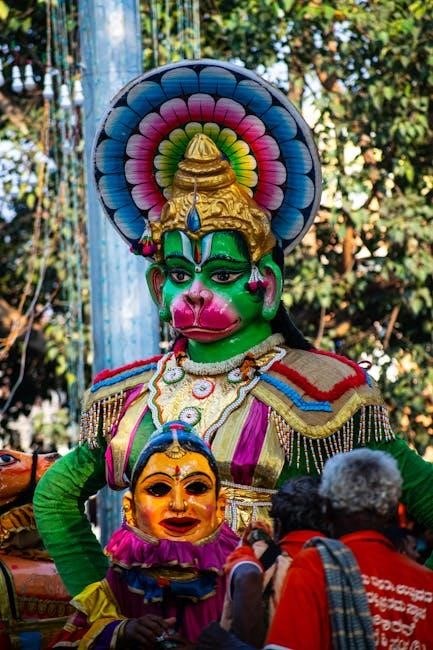
Recitation and Practice
Proper pronunciation of Gujarati verses is vital for effective recitation, enhancing the devotional experience and ensuring accurate understanding.

Proper Pronunciation of Gujarati Verses
Achieving correct pronunciation when reciting the Hanuman Chalisa in Gujarati significantly deepens the spiritual impact and ensures the verses’ intended meaning is conveyed with reverence. Many online resources, including audio recordings accompanying PDF versions, can aid learners. Focusing on vowel sounds and consonant clarity is crucial, as Gujarati possesses unique phonetic elements.
Pay close attention to the ‘matras’ (vowel signs) attached to consonants, as these drastically alter pronunciation. Utilizing a native speaker or a teacher familiar with Gujarati devotional practices is highly recommended for guidance. Consistent practice, coupled with mindful listening, will gradually improve accuracy. Remember, the intention behind the recitation – devotion and surrender – is equally important as perfect pronunciation, but striving for clarity honors the sacred text.
Furthermore, understanding the context of each verse can subtly influence how it’s spoken, adding emotional depth and sincerity to the recitation. Don’t hesitate to break down complex words into smaller syllables for easier pronunciation.
Recommended Times for Recitation
Traditionally, reciting the Hanuman Chalisa at specific times amplifies its benefits and aligns with auspicious energies. Many devotees prefer reciting it daily, particularly during Brahmamuhurta – the hour before sunrise – considered highly potent for spiritual practices. Tuesdays, dedicated to Hanuman, are especially favored for extended recitations and dedicated worship.
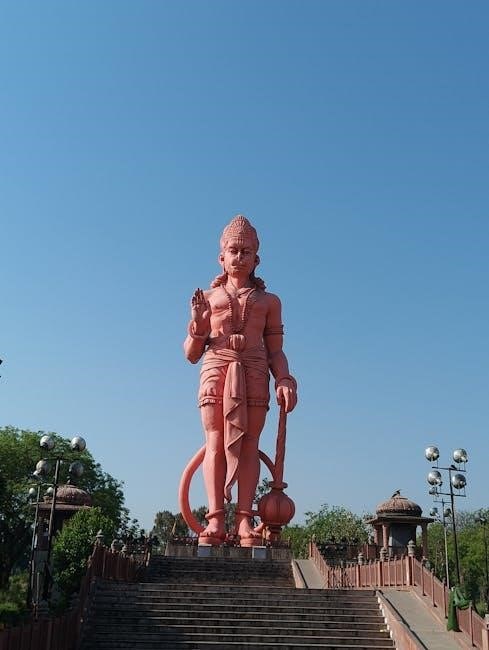
Additionally, reciting the Chalisa during times of distress, challenges, or when seeking courage and strength is believed to offer immediate solace and divine intervention. Some practitioners incorporate it into their daily puja (worship) routine, either in the morning or evening. The timing coinciding with Hanuman Jayanti, his birthday, is profoundly significant.
However, the most crucial aspect is consistency and devotion, rather than strict adherence to specific times. Reciting with a sincere heart and focused mind will always yield positive results, regardless of the hour.
Hanuman Puja and Chalisa Recitation
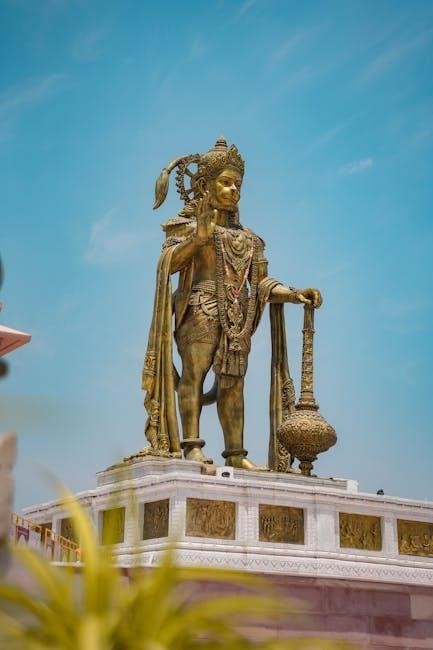
Combining Hanuman Puja with Chalisa recitation creates a powerful devotional practice. Begin by cleansing the space and oneself, then establishing a sacred altar with Hanuman’s image or idol. Offer flowers, incense, and sweets – traditionally laddus – as prasad (sacred offering).
Following the Puja, commence reciting the Hanuman Chalisa, focusing on each verse’s meaning and rhythm. Visualizing Hanuman’s divine form during recitation enhances the experience. Many devotees also offer sindur (red powder) to the idol, symbolizing devotion and strength.
Concluding the Puja, express gratitude and seek Hanuman’s blessings for well-being and protection. Distribute the prasad amongst family and friends. Regular practice fosters a deeper connection with Hanuman, cultivating courage, devotion, and spiritual growth.
Cultural Relevance and Modern Practice
Throughout Gujarat, Hanuman temples thrive, and the Chalisa remains deeply embedded in Hindu tradition, continuing to inspire devotion in modern times.
Hanuman Temples in Gujarat
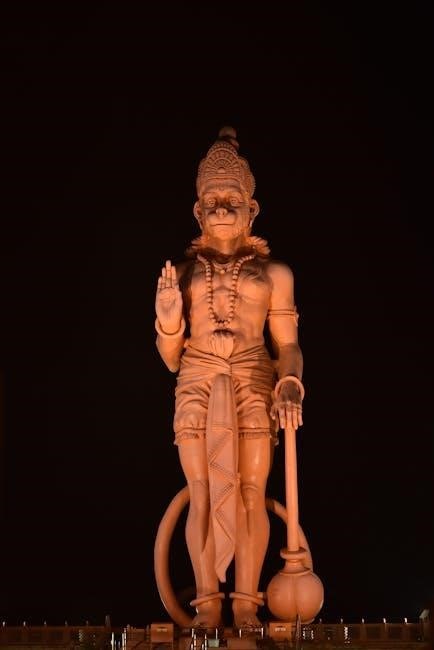
Gujarat boasts numerous Hanuman temples, serving as vital centers for devotion and the recitation of the Chalisa. These sacred spaces often host special events during Hanuman Jayanti, attracting large gatherings of devotees eager to honor the deity. Many pilgrims visit these temples seeking blessings for strength, courage, and devotion, frequently offering sindur (red powder) and flowers as a mark of respect.
The atmosphere within these temples is typically charged with spiritual energy, enhanced by the continuous chanting of the Hanuman Chalisa. Finding a Gujarati PDF version allows individuals to participate more fully in temple rituals and personal worship. These temples aren’t merely places of worship; they are cultural hubs preserving ancient traditions and fostering a strong sense of community amongst followers. They represent a living testament to Hanuman’s enduring popularity and the Chalisa’s profound impact on Gujarati Hindu life.
The Chalisa’s Place in Gujarati Hindu Tradition
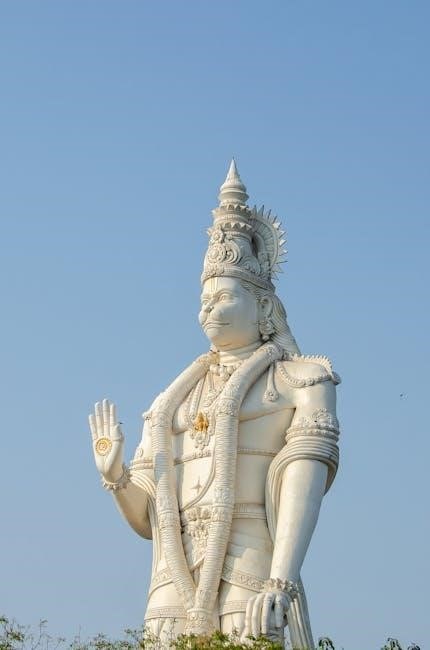
The Hanuman Chalisa holds a deeply ingrained position within Gujarati Hindu tradition, extending beyond mere religious observance. It’s frequently recited during times of difficulty, offering solace and a sense of divine protection. Accessing a Gujarati PDF version of the Chalisa facilitates wider participation in this cherished practice, particularly for those less familiar with Sanskrit or Hindi.
Its verses are believed to bestow blessings of strength, wisdom, and unwavering devotion, mirroring Hanuman’s own qualities. The Chalisa is often incorporated into daily puja (worship) routines and is considered particularly auspicious when recited on Tuesdays, Hanuman’s sacred day. This tradition underscores the enduring reverence for Hanuman and the Chalisa’s role in strengthening faith and fostering a connection to the divine within the Gujarati Hindu community.