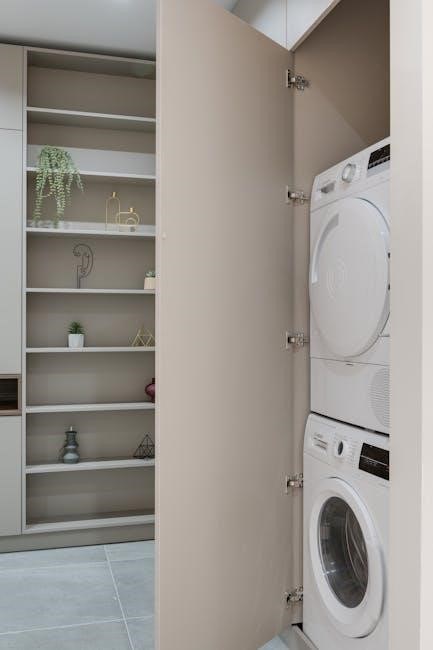
Amana Washer Instructions: A Comprehensive Guide
Welcome! This guide assists with your new Amana washer, offering step-by-step instructions and essential maintenance tips. Find your specific model’s manual at Amana’s website for detailed support.
Understanding Your Amana Washer Model
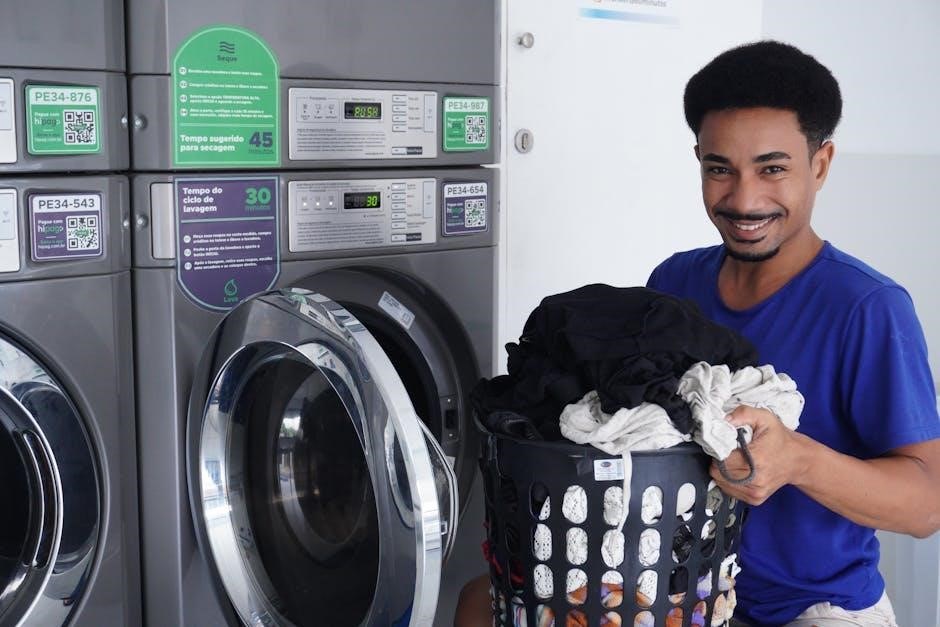
Identifying your specific Amana washer model is crucial for accessing the correct resources and ensuring proper operation. Amana offers a variety of top-load and front-load washers, each with unique features and specifications. The model number is typically located on a sticker or plate, often found inside the washer lid, on the back panel, or around the door opening.
This number is essential when searching for user manuals, parts, or troubleshooting assistance. Amana’s website (amana.com) provides a comprehensive library of manuals categorized by model. Knowing your model allows you to pinpoint specific instructions related to your machine’s capabilities, such as wash cycle options, detergent dispenser settings, and spin cycle adjustments.
Different models may have varying control panel layouts and functionalities. For example, some Amana washers feature advanced features like automatic dispensers or steam cycles, while others offer more basic settings. Referencing the correct manual ensures you understand how to utilize all the features available on your Amana washer effectively. Understanding these nuances will contribute to optimal performance and longevity of your appliance.

Locating the User Manual
Finding your Amana washer’s user manual is the first step towards understanding its operation and maintenance. Several avenues are available to locate this vital resource. The primary source is the official Amana website, amana.com/owners/user-manual, which hosts a searchable database of manuals categorized by model number. Simply enter your washer’s model number to access the corresponding digital manual.
If you’ve misplaced the physical copy that came with your appliance, this online resource is invaluable. Alternatively, a general web search using your model number and the term “user manual” often yields direct links to downloadable PDFs. Websites like ManualsLib and similar document repositories may also host copies.
The user manual provides step-by-step instructions, helpful tips, and essential information for effective use and upkeep. It covers everything from initial setup and control panel operation to troubleshooting common issues and performing routine cleaning. Amana, Glenwood, and Caloric models all have accessible manuals online. Don’t hesitate to utilize these resources to maximize your washing experience.
Initial Setup and Installation
Proper initial setup and installation are crucial for optimal Amana washer performance and longevity. Begin by carefully unpacking the washer and inspecting it for any shipping damage. Ensure all packing materials are removed from both inside the drum and around the exterior.
Position the washer on a level, stable surface capable of supporting its weight, especially when fully loaded with wet laundry. Adjust the leveling legs to eliminate any wobble. Connect the water inlet hoses to both the hot and cold water faucets, ensuring tight, leak-proof connections. Attach the drain hose securely to a standpipe or laundry tub, following the guidelines in your user manual.
Before the first use, run an empty wash cycle with a small amount of detergent to clean the drum and hoses. This removes any residual manufacturing debris. Refer to your specific model’s manual for detailed instructions regarding installation and initial operation. Proper installation prevents potential issues and ensures efficient washing.
Control Panel Overview
The Amana washer’s control panel is designed for intuitive operation, offering a range of wash cycles and options. Typically, you’ll find a cycle selector dial or buttons allowing you to choose from pre-programmed cycles like Normal, Delicates, Heavy Duty, and Quick Wash. Digital models feature electronic touch controls and a display screen.
Common control panel features include temperature settings (Hot, Warm, Cold), spin speed adjustments (High, Medium, Low, No Spin), and option buttons for features like Extra Rinse, Stain Removal, or Fabric Softener. Some models offer specialized cycles for bulky items or sanitizing. The display screen, if equipped, will show the selected cycle, remaining time, and any error codes.
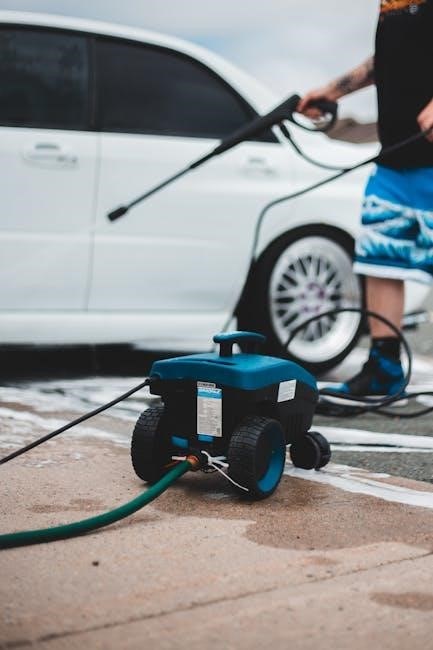
Familiarize yourself with the specific layout of your model’s control panel by consulting the user manual. Understanding each button and setting allows you to customize wash cycles to meet your laundry needs effectively. Proper use of the control panel ensures optimal cleaning performance and fabric care.
Loading the Washer Correctly
Properly loading your Amana washer is crucial for effective cleaning and preventing damage to both the machine and your clothes. Avoid overloading the washer; clothes need room to move freely for optimal agitation. A general rule is to fill the drum no more than three-quarters full.
Distribute the load evenly around the agitator (in top-load models) or the drum (in front-load models). Uneven loads can cause the washer to become unbalanced, leading to excessive vibration and potential damage. For best results, mix large and small items to help maintain balance.
Before loading, empty pockets and close zippers and hooks to prevent snagging. Delicate items should be placed in a mesh laundry bag for added protection. Always follow the care label instructions on your garments. Incorrect loading can reduce cleaning performance and shorten the lifespan of your Amana washer.
Detergent Dispenser Instructions
Your Amana washer’s detergent dispenser is designed for efficient and convenient detergent delivery. The dispenser typically features separate compartments for detergent, fabric softener, and bleach. Always refer to your specific model’s user manual for precise compartment locations and usage guidelines.
For top-load washers, pour liquid detergent into the designated compartment before starting the wash cycle. Powdered detergent can be added directly into the wash basket. Avoid overfilling the compartments, as this can lead to residue buildup and reduced cleaning performance. Use only High Efficiency (HE) detergents in HE washers to prevent excessive suds.
When using fabric softener, dilute it with water according to the product instructions and pour it into the fabric softener compartment. Never pour fabric softener directly onto clothes, as it can cause staining. Bleach should be diluted with water and added to the bleach compartment. Regularly clean the detergent dispenser to prevent clogs and maintain optimal performance.
Wash Cycle Selection
Amana washers offer a variety of wash cycles to accommodate different fabric types and soil levels. Common cycles include Normal/Regular, Delicates, Permanent Press, Heavy Duty, and Quick Wash. The Normal/Regular cycle is suitable for everyday laundry, while Delicates is ideal for fragile items like lingerie and silk.
Permanent Press helps minimize wrinkles in synthetic fabrics, and Heavy Duty tackles heavily soiled items like work clothes or towels. The Quick Wash cycle provides a faster wash for lightly soiled loads. Some models may also feature specialized cycles like Bulky Items or Whites.
To select a cycle, turn the cycle selector dial to the desired setting. Refer to your user manual for detailed descriptions of each cycle and recommended load sizes. Consider the fabric type, soil level, and desired wash time when choosing a cycle. Incorrect cycle selection can damage clothes or result in unsatisfactory cleaning performance. Always check garment care labels before washing.
Water Temperature Settings
Amana washers provide several water temperature options to optimize cleaning and protect fabrics. Typically, you’ll find settings for Hot, Warm, and Cold water. Hot water is best for whites and heavily soiled items, as it effectively removes dirt and stains, but can cause colors to fade and fabrics to shrink.
Warm water is a versatile option suitable for most loads, offering a balance between cleaning power and fabric protection. It’s ideal for moderately soiled clothes and colors. Cold water is recommended for delicate fabrics, bright colors, and to prevent shrinking or fading. It’s also energy-efficient.
Select the appropriate temperature by pressing the corresponding temperature button on the control panel. Always check garment care labels for specific temperature recommendations. Using the wrong temperature can damage your clothes. Some models may offer additional temperature settings or customized wash options. Refer to your user manual for detailed guidance on water temperature settings for your specific Amana washer model.
Understanding Wash Cycle Options
Amana washers offer a variety of wash cycle options designed to cater to different fabric types and soil levels. Common cycles include Normal/Regular, Delicates, Permanent Press, and Heavy Duty. The Normal/Regular cycle is suitable for everyday laundry, providing a balanced wash for cotton and durable synthetics.
The Delicates cycle uses a gentle wash action for fragile items like lingerie and silk. Permanent Press minimizes wrinkles in wrinkle-resistant fabrics. Heavy Duty tackles tough stains and heavily soiled items like work clothes and towels, utilizing a more vigorous wash action and longer wash times.
Some models may include specialized cycles like Bulky Items for bedding or comforters, or Quick Wash for lightly soiled items needing a fast refresh. Always consult your user manual to understand the specific features and recommended uses for each cycle on your Amana washer. Selecting the correct cycle ensures optimal cleaning performance and fabric care.
Using the Spin Cycle
The spin cycle is a crucial part of the washing process, extracting water from your laundry to reduce drying time. Amana washers typically offer multiple spin speed options, ranging from Low to High. Lower spin speeds are gentler on delicate fabrics, minimizing wrinkles and potential damage, but leave clothes wetter.
Higher spin speeds remove more water, shortening drying time, but can cause more wrinkles and are not suitable for all fabrics. The Normal spin speed is generally appropriate for most loads. For bulky items like blankets, a slower spin speed is recommended to prevent imbalance and ensure efficient water extraction.
Some Amana models feature a No Spin option, useful for hand-wash items or delicate fabrics that shouldn’t be spun. Always check the care label of your garments before selecting a spin speed. An unbalanced load can cause excessive vibration and potentially damage the washer, so ensure even distribution of clothes within the drum.
Troubleshooting Common Issues
Washer won’t start: First, verify the power cord is securely plugged in and the circuit breaker hasn’t tripped. Check if the lid switch is functioning correctly – the washer won’t operate if the lid isn’t fully closed.
Washer won’t drain: A clogged drain pump is a frequent culprit. Consult resources like PartSelect.com for model-specific drain pump replacement instructions. Also, inspect the drain hose for kinks or obstructions.
Washer is vibrating excessively: Ensure the washer is level on the floor. An unbalanced load can also cause vibration; redistribute the clothes evenly. If the issue persists, the suspension rods might need inspection.
Error codes: Refer to your user manual for a list of error codes and their corresponding solutions. These codes provide valuable diagnostic information. For more complex issues, contacting Amana’s service department is recommended.
Cleaning and Maintenance
Regular cleaning extends your Amana washer’s lifespan and maintains optimal performance. After each wash, leave the lid slightly ajar to allow the drum to air dry, preventing mildew growth.
Monthly maintenance includes cleaning the detergent dispenser to remove residue buildup. Wipe down the exterior with a damp cloth and mild detergent. Inspect and clean the lint filter regularly, as a clogged filter reduces efficiency.
Deep cleaning (every 6 months): Run an empty wash cycle with hot water and a washing machine cleaner. This helps remove accumulated dirt and grime. For stubborn odors, add a cup of white vinegar to the cycle.
Important: Always disconnect the power before performing any maintenance. Refer to your user manual for specific cleaning recommendations for your model. Proper care ensures years of reliable service from your Amana washer.
Replacing the Drain Pump
If your Amana washer isn’t draining properly, the drain pump may need replacing. Safety first: disconnect the power supply before starting any repairs. Accessing the pump typically involves removing the washer’s back panel.
Locate the drain pump – it’s usually connected to the drain hose and the washer’s tub. Disconnect the hoses attached to the pump, being prepared for some residual water. Carefully detach the electrical connectors.
Install the new pump by reversing the removal process. Ensure all connections are secure and watertight. Amana, Glenwood, and Caloric models can find specific pumps at PartSelect.com.
Testing is crucial: reconnect the power and run a short drain cycle to verify the new pump is functioning correctly. If issues persist, double-check connections or consult a qualified technician. Always refer to your service manual for detailed diagrams.
Triple Lip Seal and Bearing Kit Replacement
A worn triple lip seal and bearing kit can cause leaks and noisy operation in your Amana washer. Replacement requires specialized tools and careful attention to detail. The kit typically includes a new seal, bearings, and sometimes a suspension rod.
Begin by disconnecting the power and removing the washer tub. Accessing the bearing and seal requires removing the inner and outer tub assemblies. Carefully extract the old seal and bearings, noting their orientation for correct installation.
Install the new components, ensuring they are properly seated and lubricated. The document provides detailed instructions for various Amana and Maytag models. Reassemble the washer, carefully aligning all parts;
Testing is essential: reconnect the power and run a wash cycle, checking for leaks and unusual noises. Amana Top Load Washer Service Manual RS3100007 (available online) provides valuable guidance. If problems continue, seek professional assistance.
Calculating Actual Working Time (Z-03) ― Polish Context
While seemingly unrelated to washer operation, understanding “Z-03” – actual working time – reflects a broader context of time management principles applicable to appliance maintenance. In a Polish employment framework, Z-03 is a key metric for payroll and efficiency.
Calculating Z-03 involves summing all work hours within a period, excluding absences. A calculator can assist, treating each day as worked unless designated as non-working. This methodology, though for employment, mirrors tracking time spent on washer repairs.
Relating this to your Amana washer, consider the time invested in troubleshooting, ordering parts, and completing repairs. Accurately logging these hours, similar to Z-03 calculation, helps assess the true cost of ownership and maintenance.
Effective time tracking, whether for employment or appliance upkeep, promotes efficiency. Understanding the total time commitment for washer maintenance informs decisions about repair versus replacement, mirroring the importance of Z-03 in workforce management.
Effective Work Time Methodology
Applying a structured methodology to Amana washer maintenance, mirroring principles of “effective work time,” maximizes repair efficiency and minimizes downtime. This approach emphasizes precise tracking and optimized processes, similar to calculating “Z-03” in a professional context.
Initial Assessment: Begin with a thorough diagnosis. Document observed issues and potential causes. This parallels initial task definition in work time management.
Parts Acquisition: Efficiently source replacement parts. Utilize resources like PartSelect.com. Record order dates and delivery times – tracking resource allocation.
Repair Execution: Follow service manual instructions (like the Amana Top Load Washer Service Manual) meticulously. Log each step and time spent.
Post-Repair Testing: Verify functionality. Document test results. This confirms task completion and quality control.
Time Analysis: Review logged times. Identify areas for improvement. This iterative process, akin to refining work methodologies, enhances future repair efficiency and reduces overall maintenance costs.
Resources for Parts and Service
Ensuring your Amana washer remains operational requires access to reliable parts and service options. Amana’s official website, amana.com, provides access to manuals and support documentation for various models, including those like the NTW4516FW.
For specific component sourcing, particularly for items like drain pumps, PartSelect.com is a valuable resource. They specialize in appliance parts and offer model-specific searches to ensure compatibility.
Beyond online resources, consider authorized Amana service providers in your area. These technicians possess specialized knowledge and can diagnose complex issues efficiently. Local appliance repair shops may also carry common replacement parts.
Detailed service manuals, such as the Amana Top Load Washer Service Manual (RS3100007 ⎼ available on archive.org), are invaluable for DIY repairs, offering step-by-step guidance for tasks like replacing the triple lip seal and bearing kit.